Wednesday, March 11, 2015

Fourth Interview Questions: Update

These will be my 20 or so new questions for Mr. Ed Maloney. Questions and number of questions asked will be subject to change:

If you were to give a message to your younger self, what would it be?
When did you start collecting airplanes?
Why did you start collecting airplanes?
What do you think of when a plane is added to the museum?
Did you picture your plane collecting to grow to this scale 60 years ago?

Volunteers
What do you define volunteering as?
What does any volunteer need to have?
What roles does volunteering have at your museum?
How has volunteering changed over the years?
How has the communication worked? What didn’t?
Why do you think people volunteer?

Skills
What skills are required to volunteer at Planes of Fame?
What kind of freedom does Planes of Fame give to volunteers in utilizing outside skills?
How does Planes of Fame allow volunteers to utilize outside skills?

Management
What do you define volunteer management as?
How does Planes of Fame choose to manage its volunteers?
What should the relationship between managers and volunteers be?
What do you perceive the relationship is between managers and volunteers?

Museum Message
What is Planes of Fame’s message/quota/motto?
How has Planes of Fame communicated that message over the years?

Visitors
How has your collection affected your visitor’s experience?
How have you communicated with guests over years?
How has Planes of Fame chosen to communicate with its guests?
How have visitors at your museum changed over the years?
How have you adjusted to those changes?
What is your biggest challenge when working with visitors?

Monday, March 9, 2015

Fourth Interview Questions

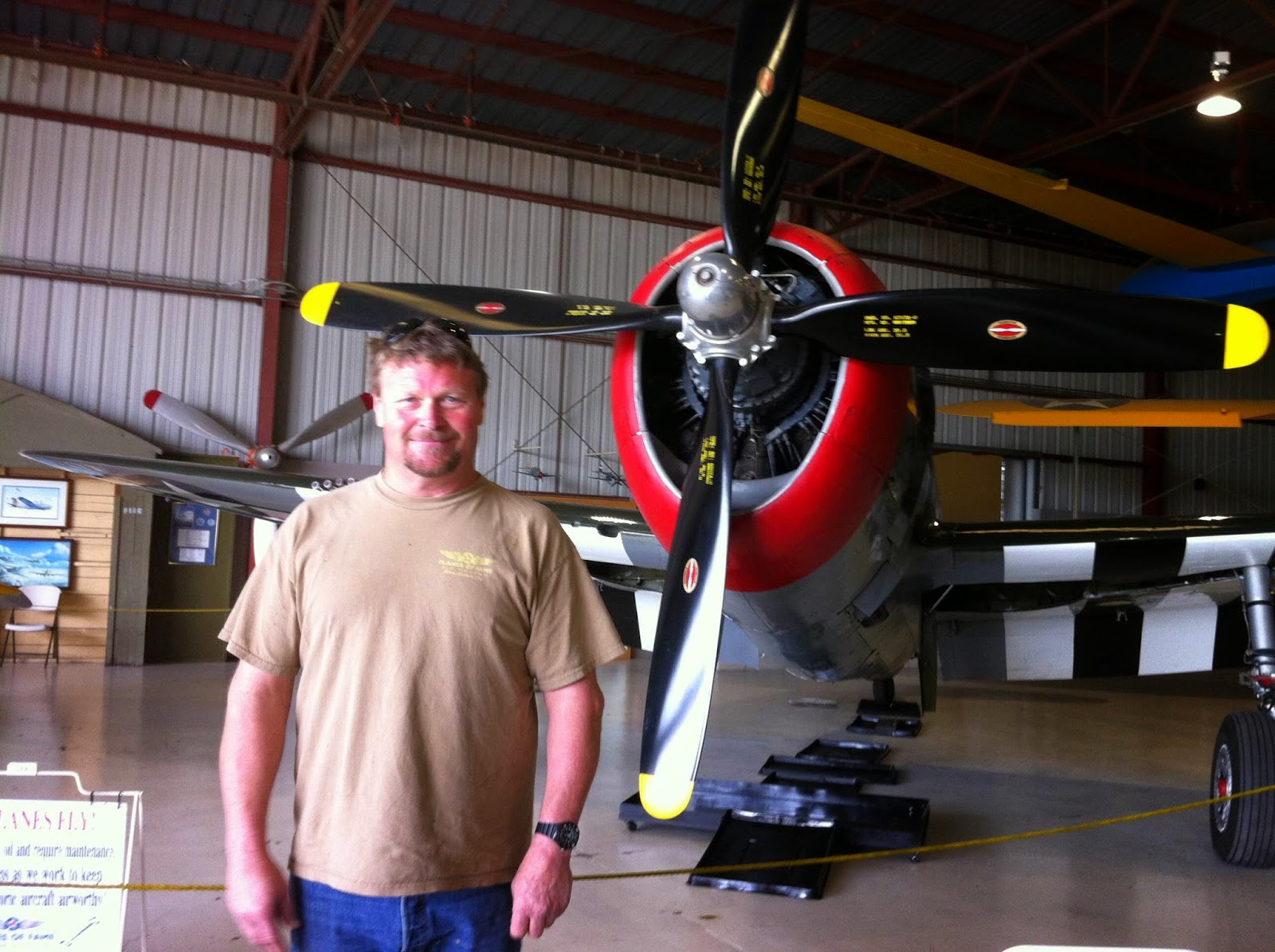
For my 4th interview. I will be interviewing Mr. Edward T. Maloney. Edward T. Maloney is known to one of the forerunners of the modern airplane museum, developing air museum concepts and principals that would be widely imitated by every airplane museum since then.

During the post-war 50's when all war material was being scrapped, Edward T. Maloney, after watching famous planes he heard about get destroyed in front of his eyes,  had the foresight to save as many planes as he could for future generations. Today some of the planes he saved ARE THE ONLY ONE OF ITS KIND IN EXISITANCE such as the world's only flyable Mitsubishi A6M5 Zero with its original Sakae engine, a flyable Nakajima Ki-84 which he would loan to the Japanese, one of two original Boeing P-26A Peashooter, the world's only Mitsubishi J8M1 Shusui, a Yokosuka D4Y3 Model 43 Suisei, a Northrop N9MB Flying Wing, an Aichi D3A2 Val that is being restored to flight status, a Mitsubishi J2M Raiden, and from this small list out of 146 planes, you get the picture.

Ed Maloney was also heavily involved in acquiring or displaying aircraft around the world. He has made numerous trips to places such as Guatemala to the Pacific Islands to acquire. In 1970 Ed Maloney brought over his one of a kind flyable Mitsubishi A6M5 Zero with the original Sakae engine, to Japan for tour, the first time a Zero had been on Japanese soil for 35 years. The plane went on tours across Japan, being viewed by 10 million Japanese people. WWII Japanese pilots wept or were amazed to see an airplane they haven't seen in decades. Notable Japanese such as Jiro Horikoshi, designer of the A6M Zero family, and Saburo Sakai, one of Japan's best aces, became friends with Ed from his tour. Even now Ed still likes showing his love for airplanes to foreigners. A couple of years ago when the Mitsubishi company began was restoring a J8M1 Shusui airframe they found a couple decades ago, Ed allowed them to send a team to Planes of Fame to get measurements of his J8M1 Shusui prototype. Last year, he sent his Boeing P-26A Peashooter to Duxford for an airshow, the first time a Peashooter was on European soil in decades, which I saw during my trip there. His planes have been shown on various media such as Pearl Harbor (2001), Tora Tora Tora, Valkyrie, Memphis Bell, etc.

After noticing early plane museums in the 50's left their planes to rot away, Ed Maloney also the foresight to conserve and restore his planes. This foresight have led to extremely well preservation of some his planes, some of which should have rusted away. Since then, many museums have imitated Ed's philosophy from Duxford in the UK to the Smithsonian Institute, but none have done it as better or as thoroughly as Ed Maloney. He's proud of the work he's done and how other museums have followed him in saving aircraft. He can be found wandering the museum on certain days and when you strike a conversation with him, at how much knowledge he has.

For now I will be asking him these questions:

 Job/Field
What was your initial perception of your job prior to working?
What questions are often raised in your job field?
What are the most important aspects of your job?
How does your job help with the guest experience?
Describe your daily duties as the Founder/Director?
How has your job changed adapted over these past few years? How have you adapted to these changes?
What kind of knowledge did you need to learn in this kind of field (museums)?
What kind of skills did you have prior to entering your field? How did those skills help you?
How do you deal with people outside of the museum for work?

Museums
What do you define a museum as?
What sparked the idea to turn your collection into a museum?
What have been your greatest triumphs at the museum?
What about greatest failures?
How has working here changed your perception of museums?

Visitors
Who is this museum for?
Why do you think people continue to go to your museum?
What is the thing you consider the most when dealing with your visitors?
What is the most important aspect about visitors that you focus on.
What was your most memorable experience dealing with a visitor(s)? What did you thought of during this?
How does Planes of Fame engage/interact with its visitors? What are the benefits for the museum and the visitor for using this method? What about disadvantages?

Other Topics
What does Planes of Fame mean to you?
What is it like to work in a facility of this scale?
What is your main goal at the museum?
What drives you to go to work everyday?
If you were to give a message to your younger self, what would it be?
When did you start collecting airplanes?
Why did you start collecting airplanes?
What do you think of when a plane is added to the museum?
Did you picture your plane collecting to grow to this scale 60 years ago?
How has your collection affected the visitors’ experience?

Wednesday, March 4, 2015

Blog 17: Third Answer

EQ
  • What is the best way to maximize a visitors' experience at an aircraft or space museum?

Answer #3 (Write in a complete sentence like a thesis statement)*
  • A volunteer program that allows its volunteers to utilize their individual skills.

3 details to support the answer (a detail is a fact and an example)
  • Volunteers are usually more motivated to work, to teach, and less likely to complain than paid staff.
  • Volunteers sometimes have significantly more knowledge about aircraft or science than paid staff and can be utilized to inform guests.
  • Giving volunteers free reign allows them to experiment with different styles of volunteer engagement than is usually permitted by paid staff.

The research source (s) to support your details and answer
  • Volunteering at Planes of Fame
  • Volunteering at the California Science Center

Concluding Sentence
  • The answer to this question is mostly based off personal experience.

Saturday, February 28, 2015

Monthly Blog Assignment February: Define Museum

Hello, everyone. Benny here. Similar to my previous monthly posts, I'll be going over my initial thoughts and observations from whatever specific events(s) I came across. This month's post is pretty much about a question that I usually ask people to define. Once again, if you want a more descriptive paragraph about my mentorship duties, please refer to my Mentorship Log. Other than that, let's get started.

During most of my interviews with people, I ask the question "What do you define a museum as?" And every time I ask that question I always get different responses that are more intricate than a textbook definition. Recently I had the chance to ask a couple of Air Racers and people who work at the museum the same questions. Here are just some of the responses:
Steve Hinton Sr. - 1978, 1985 National Championship Air Races Champion (Unlimited Gold) , formerly the Youngest Pilot to win the National Championship Air Races at age 26, lost the title to his son
A museum is a collection of airplanes that brings living history to people. It respects our veterans. Every airplane has a story and it's not about combat it's about development. It's about where our world is.That's what it is to me.
Steve Hinton Jr. - 2009-2014 National Championship Air Races Champion, Youngest Pilot to win the National Championship Air Races at age 22
A museum is a experience. A place where you can come to experience anything that is that your interested in.
John Maloney - Son of Ed Maloney
Its a museum where things from the past, or present, or future, were actually a kind of past museum for historical airplanes but this museum a real museum, well theres a museum for heart theres a museum its a wide clarification,, i dont know what youre looking for, but were kinda a museum so people dont forget what happened in the past. 
Kevin Eldridge - National Air Races Racer
A museum is a place where people can come and look at things from the past and learn about everybody's history.
Rob Patterson
It's a place where you can bring your family and meet people that flew in World War II or fought in any of the conflicts. See the airplanes that did the same thing, that fought and brought our guys back. And freedom. See what freedom is about.


Tuesday, February 17, 2015

Answer 2

1. What is your EQ?

What is the best way to maximize a visitors' experience at an aircraft or space museum?

2. What is your first answer? (In complete thesis statement format)

You must be able to effectively balance between communication and knowledge so as to speak with confidence and helpfulness when confronting a guest.

3. What is your second answer? (In complete thesis statement format)

An effective management structure based around the museum's goals/mission must be in place to deal with any situations.

4. List three reasons your answer is true with a real-world application for each.
  • Needed to create a stable efficiency at the workplace - Any business/government/group/etc. with a management format
  • Management structure is tailored to the message/policies of the company - Google Headquarters with its non-traditional office setup to inspire creativity. Bungie Studios office setup with no office walls to allow for all workers to see each other's work. Valve Corporation lack of a management system to create a relaxed, cooperative environment for its employees.
  • The management reflects the companies attitudes towards various situations - Valve Corporation relaxed management style reflects their idea of making a high-quality game no matter how long it takes.
5. What printed source best supports your answer?

Disneyland Employee Handbook
California Science Center Employee Handbook
Valve Employee Handbook for New Employees

6. What other source supports your answer?

Standards and Best Practices for Museum Volunteer Programs
Collaborative Museology and the Visitor
Developing a Collections Management Policy

7. Tie this together with a concluding thought.

From what I understand, my answers to my EQ have intertwined together in some way or form and, for the most part, I have seen them proven true at the two different museums that I work at.

Tuesday, February 10, 2015

Blog 15: Independent Component 2 Approval

1.  Describe in detail what you plan to do for your 30 hours.

For my 30 hours for independent component #1, I plan on working with people at the Guest Services Department at the California Science Center to help the Science Center in creating better Center-Guest relationships and/or improving the experience for volunteers. In the event that I am not able to do this, I plan on working at Planes of Fame to help prepare for its annual, largest Airshow by helping create advertising or something of the like.

2.  Discuss how or what you will do to meet the expectation of showing 30 hours of evidence.

I will be able to showcase my work by documenting various documents, meetings, photographs, and notes that I hope to take with my fellow Guest Services Department members.

3.  Explain how this component will help you explore your topic in more depth.

I believe that with this component, it will allow me to critically analyze the various aspects of museum engagement (such as engaging a certain kind of visitor, or ways for museum staff to be more friendly) that make up a visitor's experience from multiple viewpoints and resources of those who work in this field, proving or disproving the various aspects that make up my answer(s).

4.  Post a log in your Senior Project Hours link and label it "Independent Component 2" log.


Thursday, February 5, 2015

Independent Component 1

  • LITERAL
    (a) Write: “I, Benedict Raymon Esquivel Paz, affirm that I completed my independent component which represents an estimated 73 hours of work.”
    (b) Cite your source regarding who or what article or book helped you complete the independent component.
  • Professor Au of Citrus College
  • Basic Technical Drawing 8th Edition
    (c) Update your hours in your Senior Project Hours link. Make sure it is clearly labeled with hours for individual sessions as well as total hours.
  • (d) Explain what you completed.
  • For my Independent Component 1, I have completed an Introduction to CAD class under Professor Au at Citrus College. Each 3-hour class was spent discussing a concept about drafting followed by an assignment based off that concept. The first assignments were hand drawn to give us a basic understanding of a concept. When the Professor deemed us ready, we would move to the computer lab where we would replicate our work onto the computer. Quizzes and tests are held on a regular basis to test or knowledge. By the end of 24 classes which accounted for an estimated 73 hours, I have a firm understanding of the AutoCAD software.
  • INTERPRETIVE 
  • Defend your work and explain its significance to your project and how it demonstrates 30 hours of work.   Provide evidence (photos, transcript, art work, videos, etc) of the 30 hours of work. 
  • I believe that this component was significant to my portfolio as it showed me a glimpse into the complicated process behind aircraft construction. This glimpse allowed me to appreciate unique aircraft for the design characteristics behind them for its time prior to computer aided software which would overall affect my interaction with guests. I also see my component as helpful to my project as the skills I learned can be used to help my co-workers when they are restoring airplanes at Planes of Fame.


During the early days of airplanes, drafting rooms for airplanes at companies would look like this.
Now a drafting room consists of a couple of computers in an office environment.
The textbook that I used in my Drafting Class

Some of the tools I use for handrawing

Here I am using a Triangle that is perpendicular to a stopper to create a straight line.

Here I am using a brush to sweep away any pencil shavings I have

I am using a circle guide to trace in accurate circles

I am using an Architecture Ruler to make sure that my lines have the correct dimensions

Now this is the same drawing except I am now putting it on the computer with the AutoCAD software. Here I set up construction lines to help guide me as I make my drawing.

Here are the Object (Blue)  Lines that I constructed using the Construction Lines

Now I have taken the Construction Lines out and am now left with my Object Lines

I have now modified the drawing to include dimensions of each line, circle, or angle.

Here is the end result of my work on the computer on paper.


A portfolio I did for the class which was basically a file of all the computer drawings that I did.

Assignment 1

Assignment 2

Assignment 3

Assignment 4

Assignment 5

Assignment 6

Assignment 7

Assignment 8
Assignment 9

Assignment 10

Assignment 11


Assignment 12

Assignment 13


A computer render I did for iPoly Robotics Club

  • APPLIED
    How did the component help you understand the foundation of your topic better?  Please include specific examples to illustrate this.
  • Through my drafting class, it has given a better understanding of how airplanes or similar machinery is built. This insight into the complicated design process behing airplanes helps my topic by giving me a better appreciation of unique aircraft designs which will allow me to speak more informatively with guests. At California Science Center I once had a discussion with some guests as to how and why certain aerospace craft were designed the way they are. In another instance at Plane of Fame, I was discussing with a couple the design differences between a P-51A Mustang and a P-51D Mustang along with talking about the design characteristics of the A6M Zero. Along with this, I believe that my knowledge of basic drafting principals will allow me to relate to people who were designers in the aircraft / aerospace industry on a more personal level.