Showing posts with label Monthly Blog Post. Show all posts

Thursday, May 21, 2015

Monthly Blog Assignment May: I'm Done.

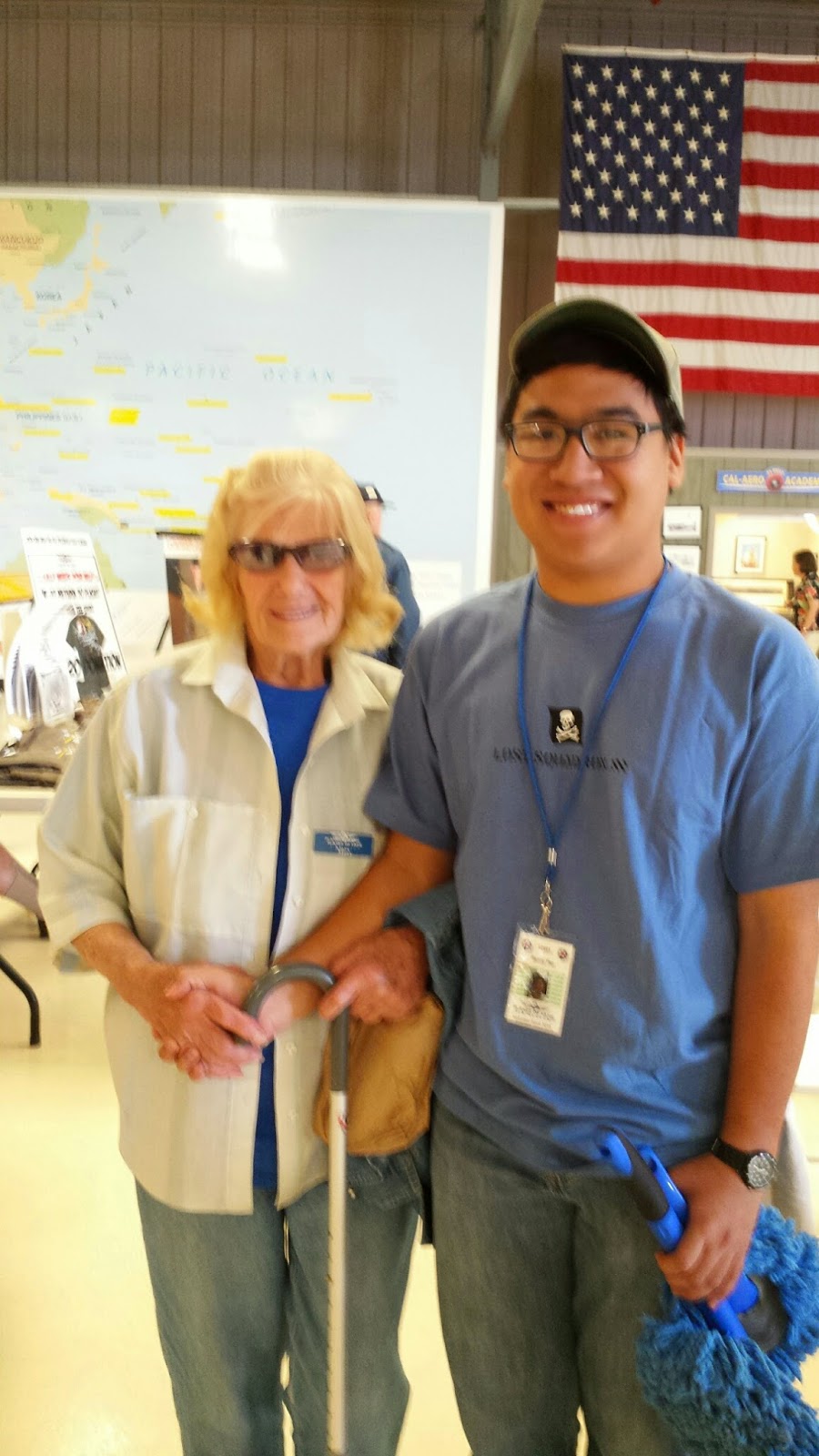
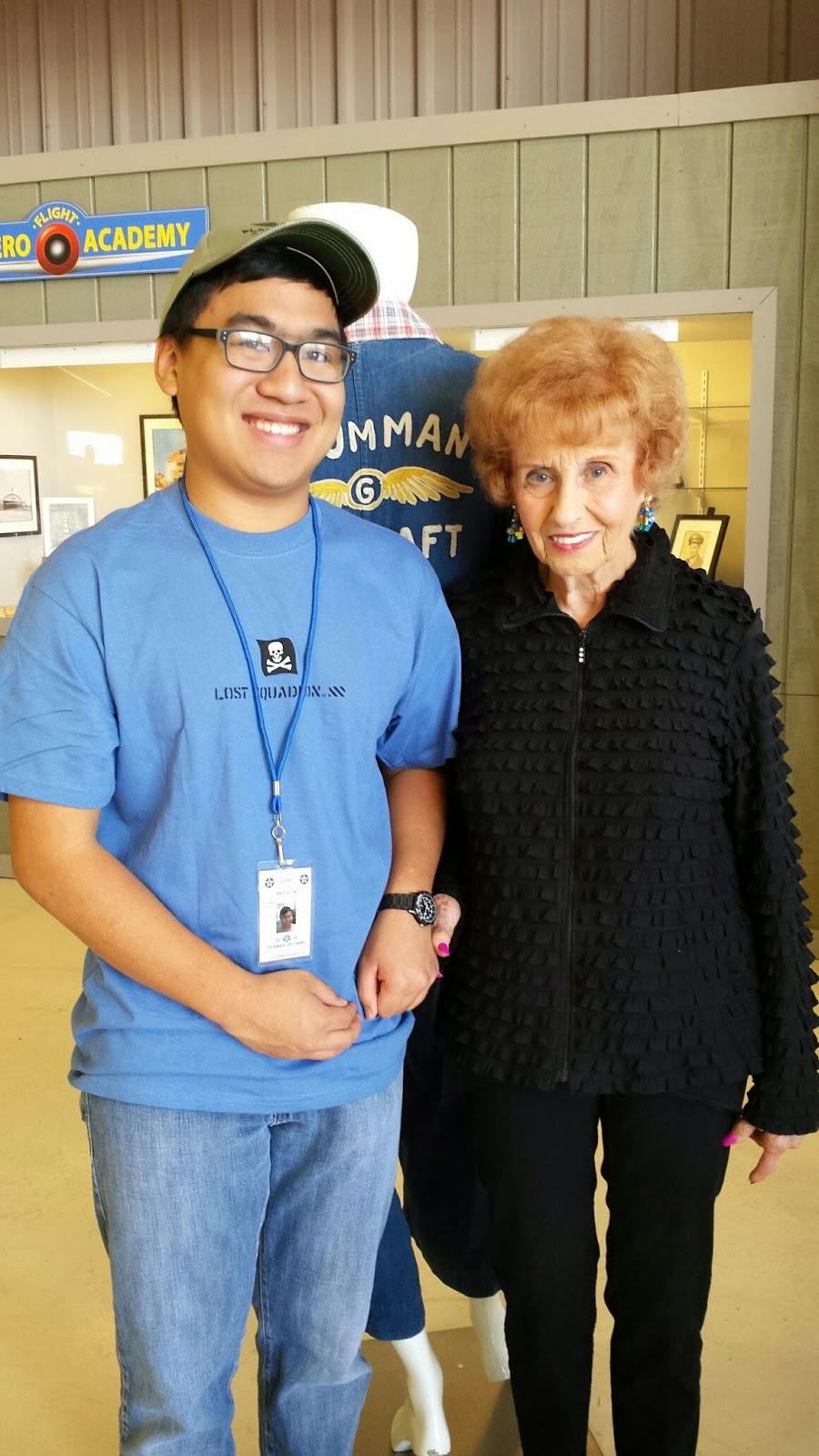
Finished Presentation. Waited 4 years or so for this moment. I'm done. It was fun while it lasted and I met many amazing people through it all. Here's some pics from my mentorship and presentation. The Presentation went better than I expected. Talked about some my sources and talked about their credentials and was able to talk to people about valuing history. Some things could have been improved upon, but for the most part, I'm happy and proud of what I have done so far.
Classroom setup the day before.

Panic on the way to school

Just finished...


Tanks for everything.

- See You Space Cowboy.

Monday, April 27, 2015

Monthly Blog Assignment April: The Big Red One is Coming

 Hello, everyone. Benny here. Similar to my previous monthly posts, I'll be going over my initial thoughts and observations from whatever specific events(s) I came across. This month's post is pretty much about a question that I usually ask people to define. Once again, if you want a more descriptive paragraph about my mentorship duties, please refer to my Mentorship Log. Other than that, let's get started.


Well in a couple of days, Planes of Fame Air Museum is going to have its annual airshow. 30,000 guests estimate, millions of dollars of planes, history living in front of you, one of a kind planes taking flight, and I'm somewhere in the middle of it all.

Am I nervous? Maybe. But I'm pretty excited to get to see dozens of historical planes all fly up at the exact same time. Heck yeah. Museums are fine and all I've seen many of them, but when a museum does something as grand as this, the things you can find are incredible and in the moments you experience, you know that this Planes of Fame is no ordinary museum. Plus, I get to see some of the planes I worked on fly.


Got my volunteer shirt. Need some sunblock and a fully charged phone.

Enough blogging. Let's do this.

LEEROY JENKINS!!!

Tuesday, March 31, 2015

Monthly Blog Assignment March: The Mental Museum

Hello, everyone. Benny here. Similar to my previous monthly posts, I'll be going over my initial thoughts and observations from whatever specific events(s) I came across. This month's post is pretty much about a question that I usually ask people to define. Once again, if you want a more descriptive paragraph about my mentorship duties, please refer to my Mentorship Log. Other than that, let's get started.

The idea of the museum is often associated with a physical place that echoes of the memories behind it, but what if that museum is not a physical place, but a person. A couple of days ago, the idea of the museum was challenged when we had three guest speakers at Planes of Fame during living history month in honor of Women’s History Month. Mary, one of our volunteers at the gift shop, who talked about how she built airplanes in England during the Blitz. Elinor Otto a “Rossie the riveter” who worked at Boeing for 49.5 years and was forced to retire from Boeing a couple months ago at age 95. Iris Cummings Critchell, one of the members of the original 99 club, an Olympic  swimmer at the 1936 Summer Olympic Games, and a civilian ferry pilot for the Army Air Corps.

All three of them spoke about their lives with such detail that shocked me when compared to the various male speakers who were much younger in comparison. After the talk, I was able to talk to Iris, about her experiences. I was previously told that she competed in the 1936 Summer Olympic Games in Berlin, Nazi Germany. When analyzed from the present, the 1936 Summer Olympics is known primarily for two things Jesse Owens and Nazis, along with various other famous Olympic events. During the Q&A after the talk, I noticed that the audience would ask Iris if she witnessed famous Olympic events, which greatly annoyed her as the audience forget the fact that:

A: SHE COMPETED IN THE OLYMPICS!!! WHY ARE YOU ASKING HER ABOUT OTHER PEOPLE!!! ASK ME!!!

B: Some of these events were impossible for her to have witnessed given the situation she was in.

Rather than do what the audience did, I just asked her what it was like to compete in the Olympics. When I asked her that her response was completely different from when she talked to the audience. Her mood changed rapidly, reminiscing about all the great moments he she had with her fellow Americans and female athletes from other nations, talking about how her father worked on the 1896 reincarnation of the Olympic Games and how that, along with seeing the 1932 Summer Olympic Games in Los Angeles inspired her to train for the Olympics, entering the stadium and seeing the thousands amongst the crowd. She had a sparkle in her eye, a different one from the one during the talk. Her eyes looked like she was once again taking part in an event that happened decades ago right in the present and telling me what she sees through those eyes. When I look back, I think about how not even a physical museum can house the various life experiences she had. And when I consider the experience I had with her and the many others I had with other people, maybe a museum is not just a physical place, but a mental one as well.  Though I may not have access to her museum, I at least took away with me a part of it.

Well that’s the end of my blog here. Enjoy my little reflection and enjoy the rest of Women’s History Month. Until next time, take care everyone.

- See You Space Cowboy...

Mary

Elinor Otto

Iris Cummings Critchell


Monday, January 19, 2015

Monthly Blog Assignment January: Observation

Hello, everyone. Benny here. Similar to my previous monthly posts, I'll be going over my initial thoughts and observations from whatever specific events(s) I came across. This month's post is pretty much about my "job"/mentorship. Once again, if you want a more descriptive paragraph about my mentorship duties, please refer to my Mentorship Log. Other than that, let's get started.

Every now and then at my work at the California Science Center, I come across some interesting people. Engineers, single parents, annoyingly rude tourists, etc. But every now and then I meet some interesting people that help give me a new perspective on things. This is another story of some of the people I have meet.

It was during the end of my shift that I met him. I was trying to make my rounds in the room before I took my leave. As I was, I noticed this family taking a picture of one their elderly members holding up a jewelry box and that they were taking pictures of him with it. I noticed that the inside contained the patch of the first Endeavor mission along with a piece of jewerly that looked like the picture on the patch. Curious as to know whether it was somebody involved in the space program or just a family that took a picture of some jewelry that they bought from the giftshop I approached them with my usual zeal. I asked who they were and they said that they were visiting the Endeavor exhibit and that the elder in their party was a jeweler for the astronauts. Yes people, of all the people involved in the space industry a jeweler would be one of the last things people consider. From there, the elder introduced himself to me. His name is Paul Dimitriu and he told me that on the first Endeavor mission, the crew approached him to make jewelry for them. Following that, astronauts began to approach and ask for jewelry for themselves and their family members until it became a tradition. I don't remember exactly what we talked about, but I remember that when the family mentioned that their 10 year old grandson wanted to go the Endeavor, I responded saying that he isn't the only person who worked directly with the space program to visit and proceeded to tell him about the support center engineer that I met a few weeks back. I asked him to take a picture with his jewelry and after that said my goodbyes and left. After about 2 minutes, I looked at my camera and saw that the quality was bad. Thinking that I needed a new picture, I looked for him again and saw him taking pictures again, this time with the Endeavor missions on the background. I asked him again about taking a picture and he agreed to take a picture with me and his jewelry. He also gave me his business card and we said our goodbyes again. After 2 minutes, a thought came up to me. I remembered that at Planes of Fame, people who worked in the aircraft industry donate their own stuff. With that in mind, I thought about emailing Mr. Dimitriu about my thought, but was surprised to find that he was still there. I asked him if he was interested in donating his jewerly to the California Science Center since we were going to open a new Air & Space wing in 2018. Mr. Dimitriu and his family loved the idea and he told me to secure him some contact about this potential deal. I told a fellow staff member about this and he referred me to Mrs. Stephanie. I told Mrs. Stephanie my story and showed her the business card as proof. She made a copy of the card and wrote a note on it for the Air & Space Collection Manager to give during the weekday. She told me "good job" and I left the building. As I made my way to the parking lot, my mom came and said she needed to go to the bathroom. While I was waiting, I went to the movie theater lobby to wait but was surprised to see Mr. Dimitriu again. I told him that I talked to management and that they would contact him within the week. After a final goodbye, I left the area.

Reflecting on this event, made me realize a few things about working at guest services.
1. Observing the smallest details is important
2. Be creative when engaging anything
3. Know a few guys to advise you on what to do.
4. Take the initiative.

Well, that's the end of my blog. Even if Mr. Dimitriu does or doesn't decide to donate his collection, this was certainly helped me a reflect a few things. I'll be looking forward to the next developments. Until next time, take care everyone.


- See You Later Space Cowboy

Monday, December 22, 2014

Monthly Blog Assignment December: Building Connections

Hello, everyone. Benny here. Similar to my previous monthly posts, I'll be going over my initial thoughts and observations from whatever specific events(s) I came across. This month's post is pretty much about my "job"/mentorship. Once again, if you want a more descriptive paragraph about my mentorship duties, please refer to my Mentorship Log. Other than that, let's get started.

Through my works at both the California Science Center and Planes of Fame, I've had the chance to meet up with some interesting people. Some of them were friendly with me, some of them were ***s to me, but all of them made my job a little less boring. Here are a few of the many people I've met over the past few months.


Michael Adams
Within the California Science Center, lies a room named the California Story. The California Story contains within it various artifacts from the Endeavor such as Food hydrate and heater, Fuel Cell, Tires, Toliet, an astronaut's personal belongings, and the Rocketdyne Operations Support Center. A staff member told me that the room is one of the least broing rooms out of the entire center and that I was lucky to be assigned there. We'll I think that is true for the first hour, but anything after that I just want to go home and leave already. But one guy I meet last week made me change my perception of it. Michael Adams, an engineer at the disbanded Rocketdyne Operation Support Center, was forced to go to the California Science Center by his wife. I was previously warned of his coming by a staff member, but I didn't notice him until he was over the railing and on the Rocketdyne exhibit answering questions. For me, it was interesting to finally meet someone who worked in one of the exhibits which gave it a more human feel . He confirmed some of my suspicions such as the artifacts being fakes (they weren't), but at the same time leaving with more questions (are the videos on the screens real?). Though I may never know, it at least made things a little more interesting for me every time I go back to that room.

Michael V. Ciminera, Former Vice President Northrop Grumman
The title pretty much says it all, Michael was the previous vice president of Northrop Grumman. I had previously mentioned that I met him on October during one of Planes of Fame's monthly events. Since then, I see him every now and then such as last November when I met him during our book fair event. We talk about some stuff such as various colleges that I should go to. His appearances aren't really announced, but looking forward to whenever he shows him makes things a little interesting.

Muriel P. Engelman, Army Nurse at the Battle of the Bulge

The Battle of the Bulge, one of the deadliest conflicts on the Western Front of the Second World War. It was during this conflict where Americans for once suffered a lot of casualties since the Battle for Monte Casino. Tending to the wounded was Muriel P. Engelman, one of several nurses who was located at an evacuation hospital which was later to change to a field hospital. During Planes of Fame's December monthly event, she talked about she spent the month hiding in trenches, avoiding "Buzz Bombs" / V-1 Bombs, tending to the wounded, and always worrying abouttu capture from a crippling Allied line. After her time speaking, I was able to aslk her for a picture. While I was waiting, she complained that she had a book that she signed with the wrong name and that she didn't know what to do with it. In a joking manner, I asked if I could take it. She said that its half price from $17 to $8.50. I told her that I only had $6 on me, and she grudgingly accepted. Until and even after I got my picture taken, she kept commenting that I better enjoy her book.


Picture of me with her and her book


Well with this I will end my monthly blog. Sometimes it is not the artifacts or the places, but the connections you make with people that can really make an experience memorable. Until next time, take care everyone.


- See You Later Space Cowboy - See You Later Space Cowboy


Tuesday, November 25, 2014

Monthly Blog Assignment November: My job

Hello, everyone. Benny here. Similar to my previous monthly posts, I'll be going over my initial thoughts and observations from whatever specific events(s) I came across. This month's post is pretty much about my "job"/mentorship. Once again, if you want a more descriptive paragraph about my mentorship duties, please refer to my Mentorship Log. Other than that, let's get started.

Some people ask me what do I do at an airplane museum. My usual response is that I clean airplanes, bombs. machine guns, and guns. Well it turns out that most of the bombs at Planes of Fame are shells ,disarmed, and hallowed out, the machine guns are all replicas, and the guns are all either demilled (permanently inoperable) or airsoft guns. With that the only things left that are authentic are the museum, the planes, the people, and well, anything that is not a bomb, machine gun, or gun.

Though I can easily go in-depth with the types of planes that are in the museum and how I clean them, today I am going to focus on the people I work with. The people I work with as a whole are pretty nice people. Most of them are veterans and are pretty chill talking to you about any topic (except their own personal lives). I can divide the people I work with into multiple categories: dosents, detailers, restorers, managers, veterans, visitors, special guests, senior citizens, youth, the owner, etc. Some of the people I work with fall under multiple categories, which means that they can fall under pretty unique subcategories. With that, lets continue on.

The Dosents - The Tourguides

Dosents are the most knowledgeable people in the museum, having to memorize the producer, famous flyers, service history, armament, speed, armor, development, range, and multiple aspects of a plane for multiple planes. Though they are the most knowledgeable, depending on what other categories they also fall under, they can be either extremely friendly or extremely ignorant.

The Detailers - The Cleaners

Detailers are pretty much the people whose job is to conserve a plane. Conserving can mean many things such as dusting, cleaning, polishing, etc. Detailers make sure that a plane doesn't get dirty and monitors a plane if it needs to be repaired.

The Restorers - WHERE ARE THE PARTS!!!

Restorers are pretty much the people who restore the planes and widely versed in the components of individual planes. Restorers have a wide range of tools to use at their disposal to fix a plane from riveters to belt grinders, but suffer from the lack of spare parts (due to some of their planes being one of a kind) or waiting for unique/museum/fabricated parts to fix a plane. Thus, what happens a restorer the most in restoring a plane is not the labor, time, or tools, but the parts for the plane.

The Managers - The Boss

The Managers are pretty much the people that run the whole show. Their job is to make sure that everyone is working at their best and communicates constantly with everyone. All volunteers agree that of all the people they work with, the managers are the ones that they respect the most.

The Veterans - The Original But Kickers

The Veterans are pretty much anybody who has prior military service. Veterans duties in the military vary from mechanics to pilots, to your average soldier to Navy SEALs. Most of the veterans are patriotic and aren't afraid to speak their mind. Talking about their military service with them can be very tricky as some have them have been mentally scarred during their service while others spent their days working and drinking.

The Visitor - Surprise

The Visitor is pretty much the bloodline of the entire museum. He or she can make the difference in a museum flourishing or failing. Visitors are pretty unique and come from a variety of backgrounds. Thus it is important to appeal them in anyway possible and help them make the most of their experience.

The Special Guests - Jack of the Various Trades

Special Guests are pretty much the people who give a museum new life when everything else has been overused. Special Guests, whether they be a veteran, a writer, or a businessman, give visitors a another reason to visit a museum. Though writers or businessmen are usually their to promote a product, they can be extremely friendly if you catch one by themselves and can go into pretty long discussions with them on various issues.

The Seniors - Whirlpool of emotions
Senior are pretty much anybody who is at or above the age of 50. Being the oldest, seniors are the wisest people of the entire place. Their wisdom comes from the various challenges and events that they faced in their youth and are firmly entrenched in what happened at the time. Their emotional state can vary depending on what they've been through, but overall, they're pretty friendly to talk to and shouldn't be dismissed.

The Youth - Physically strong, Mentally weak

Youth is pretty much anybody below the age of 50. Being the youth can come with its pros and cons. The first pro is that being young, the youth don't tire out as quickly as the seniors, meaning that they can do more work. Being small, the youth can also reach places of an aircraft that the seniors can't reach normally. The first con is that being young, the youth can be seen by the seniors as idiots. Not cleaning a plane properly, running into propellers which has the possibility of starting the plane (Planes of Fame suffered its first fatal fatlality/death because of this), tiring out easily if their below 13, etc.

The President - Not what you expect

The President is pretty much the guy that owns a huge portion of the museum. Though I have never met the man, you would be surprised to know that the owner is Steve Hinton, a famous air racer whose won various competitions from Unlimited to Reno. Though he's drastically different from the stereotypical image of a museum owner I have in my head, I guess that's what makes the place unique.


That is pretty much all the people I work with. With that,  I bid a farewell to all. Take care everyone.

Tuesday, October 14, 2014

Monthly Blog Assignment October: FIRST DAY AT PLANES OF FAME / Reflection Pictures

Hello, everyone. Benny here. Similar to my previous monthly posts, I'll be going over my initial thoughts and observations from whatever specific events(s) I came across. This month's post was about the Planes of Fame monthly event where I was able to meet Michael V. Ciminera, author of The Aircraft Designers A Grumman Historical Perspective which is one of my research check books. Once again, if you want a more descriptive paragraph about my mentorship duties, please refer to my Mentorship Log (9/20/14). Other than that, let's get started.

As I stated previously in blog #7, one of the things I planned on doing for Independent Component #1 was to take a design class to help me with my mentorship at Planes of Fame. My mother suggested to me that in correlation with my independent component  I should attend the Planes of Fame monthly event which would have Michael V. Ciminera as one the speakers. Michael V. Ciminera was the former Vice President of Northrop Grumman. He joined Northrop Grumman 50 years ago as a college apprentice and gained insight into aircraft design from famous airplane designers who were alive at the time. Michael helped design various Northrop Aircraft and was eventually in charge of several Northrop Grumman aircraft Fire Scout, UCAS and the X-47B. His book, The Aircraft Designers A Grumman Historical Perspective, details the background of various Norhtrop Grumman engineers, designers, founders, and aircraft since its start during the early 1900's.

On the day of the event, Michael V. Ciminera was the first speaker. He talked about the various sections of his book and the work and effort he put into it to represent the men and women who worked at Northrop Grumman. After the event, I was able to speak to Michael V. Ciminera about my senior project. He gave me his business card and to contact the number if I needed additional help. After he signed my copy of his book, I returned back to my work station and continued dusting airplanes.

Well with this I will end my monthly blog. It was a change of scene for me to meet one of the guys who may have designed or trained under the guys who designed the aircraft that I clean. Hearing Michael speak and also reading his book had also opened my eyes into how aircraft is designed and it how it incorporates multiple fields. Well with that I bid a far well. Until next time, take care everyone.
Michael during his presentation.

Michael signing my copy.


A picture of me and Michael.


Tuesday, September 30, 2014

Monthly Blog Assignment September: FIRST DAY AT PLANES OF FAME / Reflection Pictures

Forgot to post these pictures with my Monthly Blog Assignment September.


Me with my work clothes and two California Dusters
Me dusting the Douglas D-558-2 Skyrocket #1

Saturday, September 20, 2014

Monthly Blog Assignment September: FIRST DAY AT PLANES OF FAME / Reflection

Hello, everyone. Benny here. Similar to August's blog post, I'll be going over my initial thoughts and observations from Planes of Fame compared to what I have done or seen before. Once again, if you want a more descriptive paragraph about my mentorship duties, please refer to my Mentorship Log (9/20/14). Other than that, let's get started.

Reaffirming my previous preconceptions, most of the volunteer staff at Planes of Fame is around 50-70 years old. Most of them come from either military or aviation backgrounds and have been volunteering at the museum long past the 6 month requirement. Also reaffirming my blog post from last month, the exhibits at Planes of Fame are not as interactive as those in the California Science Center and not as visitor safe (I heard from one of the volunteers at the brake room how a boy scout, despite the opposition of the scout master, went under the wing of an aircraft and bruised his head on the wing) whereas the Science Center focuses on interactive exhibits and whose aircraft based artifacts are either suspended beyond visitors' hands or heavily encased and or closed of by heavy plastic or railing. For the work policy, as a cleaner, my job isn't heavily enforced as my responsibilities are knowing how to correctly clean an aircraft, however unlike the Science Center, since most of the aircraft at Planes of Fame are flyable and fatalities have occurred, the museum has a very strict safety policy with safety officers patrolling the campus.

Unlike the science center, where I had to utilize a lot of my skills that I learned from iPoly as guest services, as I was a cleaner I only had to use my social skills when interacting with a few visitors and coordinate / work together with fellow staff.

Well with this I will end my monthly blog. There are unique challenges that I must now face in both museums, Planes of Fame as a cleaner in a under-funded museum that pursuits in keeping history alive and as guest services at a highly interactive heavily-funded museum. These unique challenges over time will allow to explore more aspects of a museum then if I were to stick with one. Well with that I bid a far well. Until next time, take care everyone.

Sunday, August 31, 2014

Monthly Blog Assignment August: MISSION 2: FIRST DAY AT THE CALIFORNIA SCIENCE CENTER / Reflection


Hello, everyone. Benny here. Today's blog is going to be a reflective blog post about my first day at California Science Center. I'll be comparing my work and observations from the California Science Center with that of Planes of Fame and Imperial War Museum Duxford. If you want a more descriptive paragraph about my mentorship duties, please refer to my Mentorship Log (8/30/14). Other than that, let's get started.

Work at the California Science Center is a lot different than from I expected coming from Planes of Fame and Duxford. One of the first things I immediately noticed was the age group of the workers that comprised the Science Center. Most of the workers at the California Science Center were around their early teens to early 30's whereas Planes of Fame had workers from all age groups and Duxford  had workers in their mid-30's to 60's. Another thing I noticed was the different level of guest engagement that the California Science Center had compared to history museums. While exhibits at the science center were more family orientated and interactive, volunteers jobs were generally limited to meet and greet. At Planes of Fame and Duxford,  the volunteers and staff would be more than happy to tell you about the various display pieces, as long as you approach them first that is. The work policy / system of the California Science Center was also something that I noticed. In Duxford and the California Science Center I noticed that the massive scale of the facility, the stable income, and the large amount of staff and volunteers, that there was ALWAYS a staff member located in every exhibit. I also noticed that in the California Science Center, they were strict about what workers can or cannot not do such as smiling at all times, strict break times, and pointing with one finger. Contrasting with this, as Planes of Fame is a smaller and relatively understaffed and under-funded facility, some of the exhibits were poorly maintained such as the unrestored aircraft that rust next to the Fighter Rebuilders building and the little amounts of staff outside of weekends and airshows.

During my work at the science center, I also noticed that a lot my traits that I acquired from iPoly appeared to show when I engaged my audiences. Following my job description, I did not hesitate to I greet anyone who made eye contact with me with a smile, a greeting, initiate a conversation, and / or offer guests any help. This was later confirmed when Mrs. Stephanie congratulated me later for my first day of work. I noticed that other volunteers and workers who didn't have the same background as I did, would often stay in one corner, with their back faced against the wall, reading the descriptions of the exhibits, and / or ignoring the guests that came before them despite their job description saying otherwise.

Well with this I will end my monthly blog. The unique challenges and differences between both Planes of Fame and the California Science Center will allow me to explore major differences and similarities in how museums can run. Until next time, take care everyone.